

Classroom learning is only part of learning to drive. Behind-the-wheel training in Maryland gives learners practical driving experience, and first-time drivers must complete six hours of in-car instruction as part of an MVA-approved driver’s education course. These lessons help students apply driving skills on the road.
It’s natural to want clear answers about what training involves and which lessons fit your needs. This guide explains how behind-the-wheel instruction works, what teen and adult training packages cover, and what affects the cost of private lessons. Private-lesson pricing depends on the instruction requested and the practice needed, with a quote provided after a quote request. You’ll also learn how to understand Maryland’s practice requirements and choose a suitable next step for building driving skills.
Key Takeaways
- Compare teen and adult lesson needs to identify whether a full driver’s education course or extra practice is the more suitable fit.
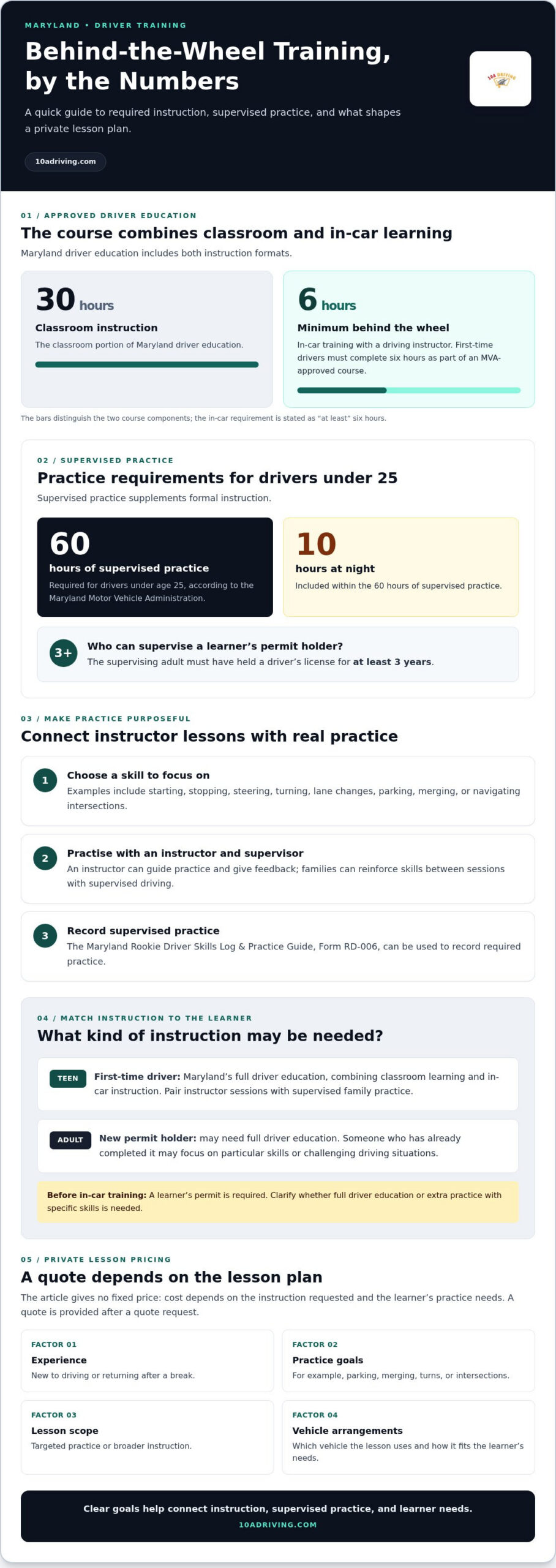
- Maryland learner’s permit holders must practice with a supervising adult who has held a driver’s license for at least 3 years.
- Private lesson costs depend on the instruction requested and the learner’s practice needs; learn which factors shape a quote.
- Drivers under age 25 must complete 60 hours of supervised practice, including 10 hours at night, according to the Maryland Motor Vehicle Administration.
Behind-the-wheel training packages for teens and adults
The right instruction depends on the learner’s experience and goals. A first-time teen driver needs Maryland’s full driver education, combining classroom learning with in-car instruction. An adult seeking a Maryland license may also need the full course, while someone who has already completed driver education may want practice with particular skills, such as merging or parking.
For teens, consider how instructor-led lessons fit alongside supervised practice with a family member. In Maryland, a learner’s permit holder’s supervising adult must have held a driver’s license for at least 3 years, according to the Maryland Motor Vehicle Administration. A lesson plan can help families identify skills to practise between instructor sessions. For example, a learner can work on smooth stops with a supervising adult, then ask an instructor to assess progress.
Adult learners can start by identifying the driving situations they find challenging. Someone comfortable on quiet roads but uneasy at busy intersections can focus practice on varied traffic conditions. A returning driver may want to refresh familiar routines, while a new permit holder needs to complete the required driver education. These are ways to describe learning goals, not separate state-mandated package types.
- Teen learner: Match instructor sessions with supervised practice and track developing skills.
- Adult learner: Identify specific driving situations to address during lessons.
- Family practice: Use the Maryland Rookie Driver Skills Log & Practice Guide, Form RD-006, to record required practice.
Before choosing a course or practice session, clarify whether the learner needs Maryland’s full driver education or extra practice with specific skills. A learner’s permit is required for in-car training. Keep a record of supervised practice and note skills that need attention so each lesson has a clear purpose.
Meaning of behind-the-wheel training
Behind-the-wheel training is practical driving instruction in a motor vehicle, not classroom study alone. The learner operates the vehicle while an instructor guides practice and observes driving decisions. In Maryland, driver education includes 30 hours of classroom instruction and at least 6 hours of behind-the-wheel training with a driving instructor. The phrase behind the wheel training MD describes this practical part of driver education: applying classroom concepts while driving.
During a session, a learner may practise starting, stopping, steering, turning, and checking traffic. An instructor can select routes that let the student apply classroom concepts in real conditions. For example, the learner may practise lane positioning on a quieter road before applying it in busier traffic. This is the practical focus of behind the wheel training MD, with instructor feedback helping the learner see what to adjust.
Training develops awareness as well as vehicle control. In commentary driving, the learner says aloud what they see, what it means, and how they plan to respond. Approaching an intersection, for example, they might identify a pedestrian, recognize the need to slow down, and explain when it is safe to proceed. This makes observation and decision-making an active part of practice.
- Before driving: Review the lesson’s focus, such as turns or lane changes.
- During practice: Follow the instructor’s directions and apply each skill in traffic.
- After the drive: Discuss what went well and what needs more practice.
Completion means the learner has finished the required instruction in the approved education program. Continued supervised practice helps reinforce skills across different driving situations. Drivers looking to strengthen established habits can consider a Driver Improvement Program as a separate learning option.
Private lesson prices
Private lesson prices vary with the instruction requested and the learner’s starting skills. A learner who needs practice with parking may need a different lesson plan from someone preparing for busy intersections. The price depends on the case and is given after a quote request. Factors include the learner’s experience, lesson goals, and the amount of instruction requested.
To make a quote useful, describe the specific driving tasks that need attention. For example, explain whether the learner wants help with lane changes, turns, backing, or general confidence behind the wheel. A clear goal helps the school understand the scope of instruction. It also helps the learner compare the proposed lesson plan with their needs, rather than focusing only on a single price.
Before requesting a quote, gather details that affect the lesson plan:
- Experience: Note whether the learner is new to driving or returning after a break.
- Practice goals: Identify skills such as parking, merging, or navigating intersections.
- Lesson scope: Describe whether the learner needs targeted practice or broader instruction.
- Vehicle arrangements: Clarify what vehicle the lesson uses and how that fits the learner’s practice needs.
The learner’s experience and goals help determine what to practise. Someone who already handles basic turns may focus on parking, while a newer learner may need to work on a broader range of skills. Compare practice plans by looking at their focus and how the instructor’s feedback will address the learner’s goals, rather than considering price alone.
Once you receive a quote, review what it includes and match it against the learner’s stated goals. If the priority is one task, such as merging, ask whether the proposed instruction focuses on that skill. If needs are broader, consider whether the plan addresses multiple driving situations. This approach gives families a practical basis for choosing private lessons without relying on unsupported average prices.
Payment for driving lessons can be made online or in person at the school with cash or money order. Maryland behind-the-wheel instruction must be based on a written lesson plan with routes that support the approved curriculum’s concepts and objectives.
Driver training
Driver training combines instructor-led education with supervised practice between lessons. In Maryland, learner’s permit holders under age 25 must complete 60 hours of supervised driving practice, including 10 hours at night, according to the Maryland Motor Vehicle Administration. Plan practice outings to build specific skills instead of driving without a focus. Behind-the-wheel training in Maryland gives learners a chance to apply driving skills under supervision.
Maryland also sets who may supervise a permit holder’s practice. A learner’s permit holder must practise driving with a licensed adult who is at least 21 years old, according to the Maryland Motor Vehicle Administration. Before starting, agree on a route and one skill to practise, such as turns or lane positioning. The supervising adult can give the learner time to repeat the skill and discuss the drive afterward.
Keep a clear record of completed practice. The Maryland Rookie Driver Skills Log & Practice Guide, Form RD-006, helps learners document sessions. Record night practice separately and note which skills need more attention. For example, after working on turns, the learner can write down whether they need further practice judging gaps in traffic. This makes the next behind-the-wheel training in Maryland session more purposeful.
- Choose a focus: Select a skill that suits the route and current ability.
- Practise with supervision: Follow the agreed plan and stay attentive to traffic.
- Record progress: Log the outing and identify a useful next step.
Instructor-led lessons and supervised outings have complementary roles. An instructor provides structured teaching and feedback; practice with a qualified adult helps learners apply skills between lessons. If more practice would help target a specific skill, plan your next practice session.
In the United States, driver’s education is typically required to obtain a first driver’s license, and driver’s education and behind-the-wheel training are both typically required for individuals to obtain a driver’s license. After obtaining a learner’s permit, a new driver may learn to drive with an adult licensed driver, subject to state-specific rules. Behind-the-wheel training gives new drivers hands-on practice driving with a professional instructor or a parent or guardian.
In Maryland, driver education schools may provide behind-the-wheel instruction only to students with a valid learner’s permit. Instruction must be taught by a certified instructor or by an apprentice instructor supervised by an experienced certified instructor. Formal lessons and supervised practice outside a driving school are distinct parts of a learner’s experience.
10A Driving School Silver Spring: Driver’s Education
10A Driving School Silver Spring provides Driver’s Education for learners who need structured instruction as they work toward driving independently. Turn to the program when classroom learning and practical driving instruction are the next steps in your learning plan.
If you already drive but want to address specific skills, Extra Practice/Personal Practice can provide additional practice. The Driver Improvement Program and 3-Hour Road Way Safety are also available for learners whose needs match those programs. Choose based on your goal, whether that is learning foundational driving skills or improving existing habits.
Describe your experience and the areas you want to work on when discussing the next step. Contact 10A Driving School Silver Spring to learn more about its driver’s education and practice options.
Make Your Next Driving Step Count
Make your next step deliberate: choose the skill you want to strengthen, then build a practice plan around it. For learners seeking behind-the-wheel training in MD, steady attention to safe decisions matters beyond any single lesson. Keep track of what feels manageable and what still needs focused instruction. That record can help you make each future practice session more purposeful.
Learning continues as driving situations change. Stay attentive to feedback, practise the skills that need work, and give yourself time to develop consistent habits. If you’re ready to discuss your learning needs, contact 10A Driving School Silver Spring to take the next step.
Approach each lesson with a clear goal and a willingness to learn. Focused practice and instructor feedback can help you build driving skills with greater confidence and care.
Frequently Asked Questions
What Is Behind-The-Wheel?
Behind-the-wheel training is supervised, practical driving instruction in a motor vehicle. The learner drives while an instructor observes and provides guidance. During a lane-change exercise, for example, the learner checks mirrors and surroundings, signals, and moves when safe. The instructor can then give feedback on observation, timing, and vehicle control, helping the learner identify what to practise next.

