

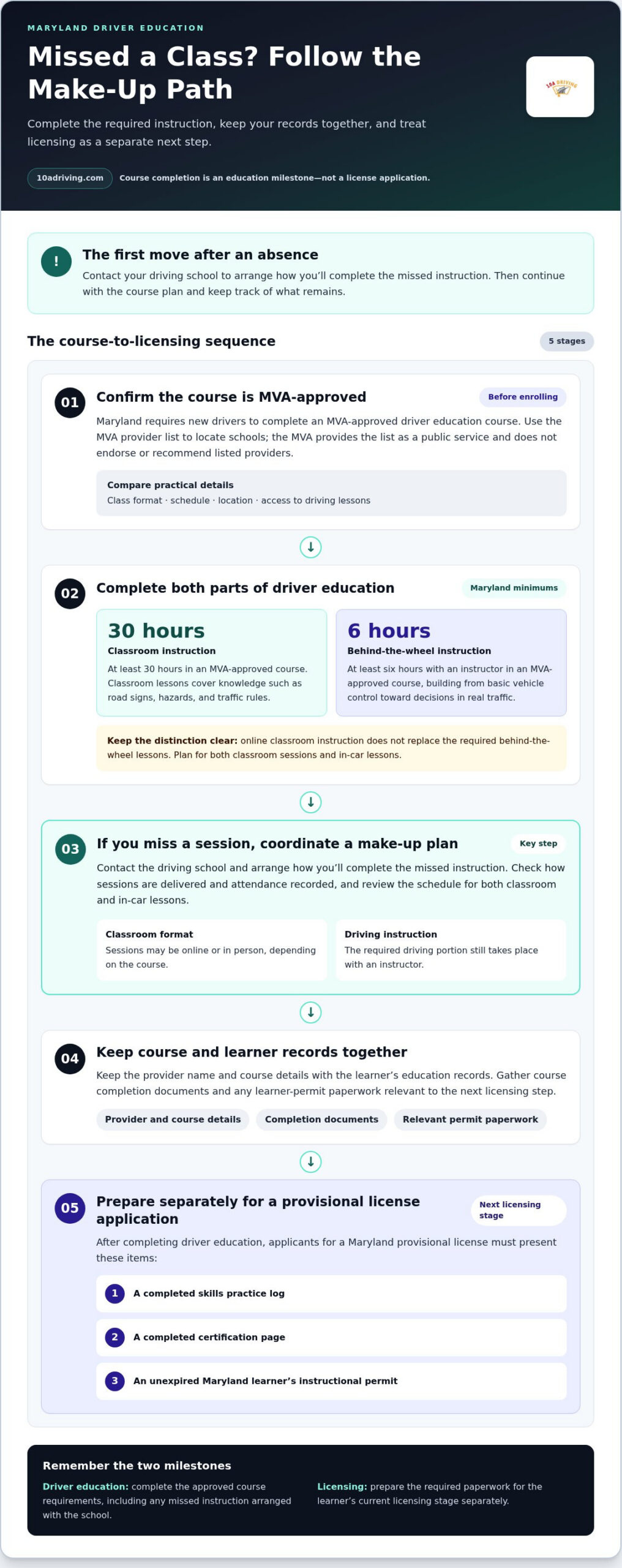
Missing a class calls for a clear make-up plan. Maryland driver education classes require at least 30 hours of classroom instruction and six hours of behind-the-wheel instruction in an MVA-approved course, according to the Maryland Motor Vehicle Administration. If you miss a session, contact your driving school to arrange how you’ll complete the missed instruction.
It’s reasonable to want to know whether missing a class will disrupt your progress toward a license. Understanding how classroom lessons, driving practice, and Maryland’s licensing steps fit together can help you plan ahead and track what remains.
This guide explains what Maryland driver education classes include, how driver education connects to licensing, and what to do after a missed class. You’ll also learn which records and practice steps matter as you move toward the next stage.
Key Takeaways
- Understand how classroom learning and behind-the-wheel practice work together to build driving knowledge and skills.
- Learn how driver education fits into Maryland’s licensing process and what records to prepare for the next step.
- If you miss a class, make a plan with your driving school to complete the missed instruction and continue your course.
- See how to choose the right kind of instruction for your learning needs and where extra practice may help.
Classroom instruction and behind-the-wheel lessons
A driver education course combines classroom learning with supervised driving practice. Maryland sets minimum hours for both parts, and each develops different skills.
Online and In-Person Class Options
Classroom instruction may be in person or online, depending on the course format. Before planning around work, school, or other commitments, find out how sessions are delivered and attendance recorded. Online classroom instruction does not replace the required behind-the-wheel lessons. Even if a student takes remote classroom sessions, they must still complete the driving portion with an instructor.
The key distinction is where instruction takes place, not whether the course includes driving. Review the schedule for classroom sessions and in-car lessons so you can plan for both.
Course Hours and Covered Topics
According to the Maryland Motor Vehicle Administration, new drivers must complete at least 30 hours of classroom instruction in an MVA-approved driver’s education course, plus at least six hours of behind-the-wheel instruction. Classroom lessons address the knowledge needed to make informed decisions while driving. Common examples include understanding road signs, recognizing hazards, and applying traffic rules in different situations.
Use the course outline to see how classroom learning connects to practical driving. A lesson about road signs, for example, helps students recognize and respond to signs during an instructor-led drive. Maryland driver education classes bring these two settings together, linking classroom knowledge with vehicle practice.
Behind-the-Wheel Lesson Locations and Safety
Maryland’s six-hour minimum applies to behind-the-wheel instruction in an MVA-approved course. With an instructor, students practise driving and progress from basic vehicle control to decisions in real traffic. The route and setting shape what they practise, such as starting and stopping in a quieter area before handling busier roads.
Ask how lessons progress and what to bring for each drive. Follow the instructor’s directions, focus on the assigned skill, and raise questions before moving on to a new task. As the student is ready, advanced practice can build on earlier lessons with more demanding routes and situations.
Maryland driver education and licensing
Driver education is one step in Maryland’s licensing process, not a license application. Keep course registration, learner-permit eligibility, and later licensing paperwork distinct.
Minimum Age for Enrollment
The age for enrolling in driver education and eligibility for a learner’s permit are separate matters. The course’s enrollment criteria determine when a learner can register; licensing requirements determine when they can apply for a permit or license. Review the age requirement for the specific class before registering, and keep course enrollment separate from the permit process.
If you’re planning ahead, first identify the learner’s current licensing stage. This clarifies whether the next step is enrolling in driver education or preparing for a permit.
Finding Approved Providers
Use the Maryland MVA’s driver education provider list to find schools. The MVA offers the list as a public service and does not endorse or recommend listed providers. Use it to locate a school, then compare practical details such as class format, schedule, and access to driving lessons.
Choose a school that fits the learner’s location and availability. Before enrolling, note the provider’s name and course details so you can keep them with the learner’s education records.
Course Registration and Completion
Start by selecting an MVA-approved course, follow its registration steps, and attend the scheduled instruction. Keep course records together, including completion documents and any learner-permit paperwork relevant to the next licensing step. If you miss a class, contact the school to arrange how to complete the missed instruction.
After completing driver education, prepare for the next licensing stage separately. Applicants for a Maryland provisional license must present a completed skills practice log, a completed certification page, and an unexpired Maryland learner’s instructional permit. A driver’s education course supports the education step, not license issuance.
Consequences of Unapproved Courses
Maryland requires new drivers to complete an MVA-approved driver education course. An unapproved course does not meet this requirement. Before registering, compare the school and course with the MVA provider list, and keep the school and course details with the learner’s records.
Keep the distinction clear: completing a course is an education milestone, while applying for a license requires the appropriate licensing documents. A provisional license application requires the skills practice log, certification page, and unexpired learner’s instructional permit.
Classroom instruction
In a Maryland driver education course, classroom time gives students a chance to consider decisions before driving. An instructor can use a road-sign example to discuss how a symbol, its location, and surrounding traffic affect a driver’s response. Rather than memorize a sign in isolation, students can explain their choice aloud and connect information to a practical decision.
Scenario discussions can connect permit study with real road situations. For example, consider approaching an intersection with a warning sign and limited visibility. The learner identifies the sign, scans the roadway, and describes an appropriate response. Breaking the decision into steps shows which skill needs more attention: recognizing the sign, observing traffic, or choosing what to do.
Make classroom time more useful by noting questions as they arise. If a rule or traffic situation is unclear, write down a specific example and ask the instructor to explain it. A focused question, such as how a driver should respond to a changing roadway condition, gives the class a clear topic to discuss. Organize notes by topic for later review.
An instructor’s explanation also lets students compare possible choices. Consider two responses to a hazard: one leaves time to react, while the other requires a sudden maneuver. Discussing the difference connects observation with decision-making. The goal is to understand the reasoning behind a safe choice, not just remember a phrase.
After class, review your notes and mark any concepts that remain difficult. Turn each point into a short question and revisit it before the next session. For example, explain a road sign in your own words and describe what nearby traffic adds to the situation. This review helps connect classroom learning with later practice in a vehicle.
How many hours are required for a Maryland driver education course?
According to the Maryland Motor Vehicle Administration, new drivers in Maryland must complete at least 30 hours of classroom instruction in an MVA-approved driver’s education course. That is the minimum classroom time, not a substitute for behind-the-wheel instruction. Keep the two parts distinct when planning the course and tracking progress.
To manage the classroom requirement, record each completed session and compare your notes with the course schedule. If you miss a class, ask the school how to complete that instruction. Note the missed session and ask how it fits into the remaining schedule. Don’t assume that attending other sessions replaces the material you missed.
Course schedules may divide classroom learning across several sessions. Before enrolling, review the timetable and note when each session takes place. Plan around school, work, transportation, and other commitments. If you know about a recurring conflict, raise it early so you understand how it may affect course completion.
Track classroom attendance separately from driving lessons. A simple record can include each session’s date, the material covered, and any follow-up questions for the instructor. This helps you spot a missed or incomplete class before the course ends. Use the school’s completion information to confirm that you’ve finished the required classroom portion.
Once you’ve planned the classroom schedule, keep the next step clear: complete the course’s required instruction and retain its completion information. If you’re ready to begin the education portion, explore driver’s education and choose a course that fits your schedule.
10A Driving School Silver Spring: Driver’s Education
10A Driving School Silver Spring provides Driver’s Education for learners preparing to build their driving knowledge and practical skills. Turn to the school when you’re ready to begin instruction or want structured support as you work through driver education.
For a different learning need, the school also offers Extra Practice/Personal Practice and a Driver Improvement Program. Its 3-Hour Road Way Safety offering is another option for its specific purpose. These services address different needs, so consider which type of instruction fits your current goal.
Review the course information and choose the service that matches your next step. For help getting started with driver education, contact 10A Driving School Silver Spring or visit 10adriving.com.
Build a Steady Path Toward Independent Driving
Turn general concerns into a clear practice focus. If a learner feels uncertain at intersections, for example, they can note the concern and discuss it with an instructor. Specific questions make it easier to connect explanations with practice and identify skills that need more attention.
Maryland driver education classes are a starting point for developing thoughtful driving habits. Keep a short record of questions, skills you want to strengthen, and progress you notice. This gives each session a practical purpose and helps you stay engaged as you work toward greater independence on the road.
Choose a next step that matches your current needs, whether you’re beginning instruction or looking for focused guidance. Plan your next step with 10A Driving School Silver Spring. Consistent effort and careful attention can help you approach each new driving challenge with greater confidence.
Frequently Asked Questions
What if I need to miss a class?
If you need to miss a session, notify the school as soon as possible and ask how to complete that class. Note the date and topic, then save any rescheduled-session details with your course records. If you miss a lesson on roadway signs, for example, make sure you know when that instruction will be covered.
What are Maryland’s driver education requirements for new drivers?
New Maryland drivers need an MVA-approved driver education course with classroom and behind-the-wheel components. The Maryland Motor Vehicle Administration sets minimums of 30 classroom hours and six hours behind the wheel. Keep course completion records together as part of your licensing preparation, rather than relying on memory when you move to the next application stage.
How much do Maryland driver education classes cost?
The price depends on the course selected and the instruction it includes. Compare what enrollment covers rather than relying on an assumed package. If you’re planning from Silver Spring, keep the written quote with your registration details to support budgeting and course planning.
What documents or tests are required after completing Maryland driver education?
For a Maryland provisional license application, prepare the completed skills practice log, completed certification page, and unexpired Maryland learner’s instructional permit. Keep the documents together and review them for completeness before submitting your application. Course completion and application preparation are separate tasks, so include both on your checklist and allow time to gather the required paperwork.
Do Maryland driver education courses offer discounts or financial assistance?
Don’t plan on a discount or financial assistance unless your enrollment terms expressly include it. For budgeting, use the quoted amount for the course you intend to take and review which instruction it covers. If you’re considering extra practice alongside a course, treat it as a separate choice rather than assuming it’s included.

